As data center development expands across Illinois, concerns continue to grow over the state’s ability to meet increasing energy demands while keeping electricity affordable and reliable. On November 18, the controversial POWER Act received a subject-matter hearing in the Senate Energy and Public Utilities Committee.
The sweeping proposal, which failed to advance during the spring legislative session, would impose new fees, permitting requirements, and reporting mandates on large-scale data centers while expanding the renewable energy policies established under the controversial Climate and Equitable Jobs Act (CEJA) in 2021. The legislation would also significantly expand the state’s reliance on wind and solar energy.
As more data centers are proposed across Illinois, there are legitimate concerns about their impact on local communities, water supplies, and electricity costs. Senate Republicans have stated that those concerns should be taken seriously. However, they have also expressed concern regarding how the current version of the POWER Act approaches new energy generation, which is effectively limited to only wind, solar, and battery storage. While those energy sources have a role to play, many energy experts believe it is unrealistic to expect those technologies to be able to provide the around-the-clock power that data centers would need.
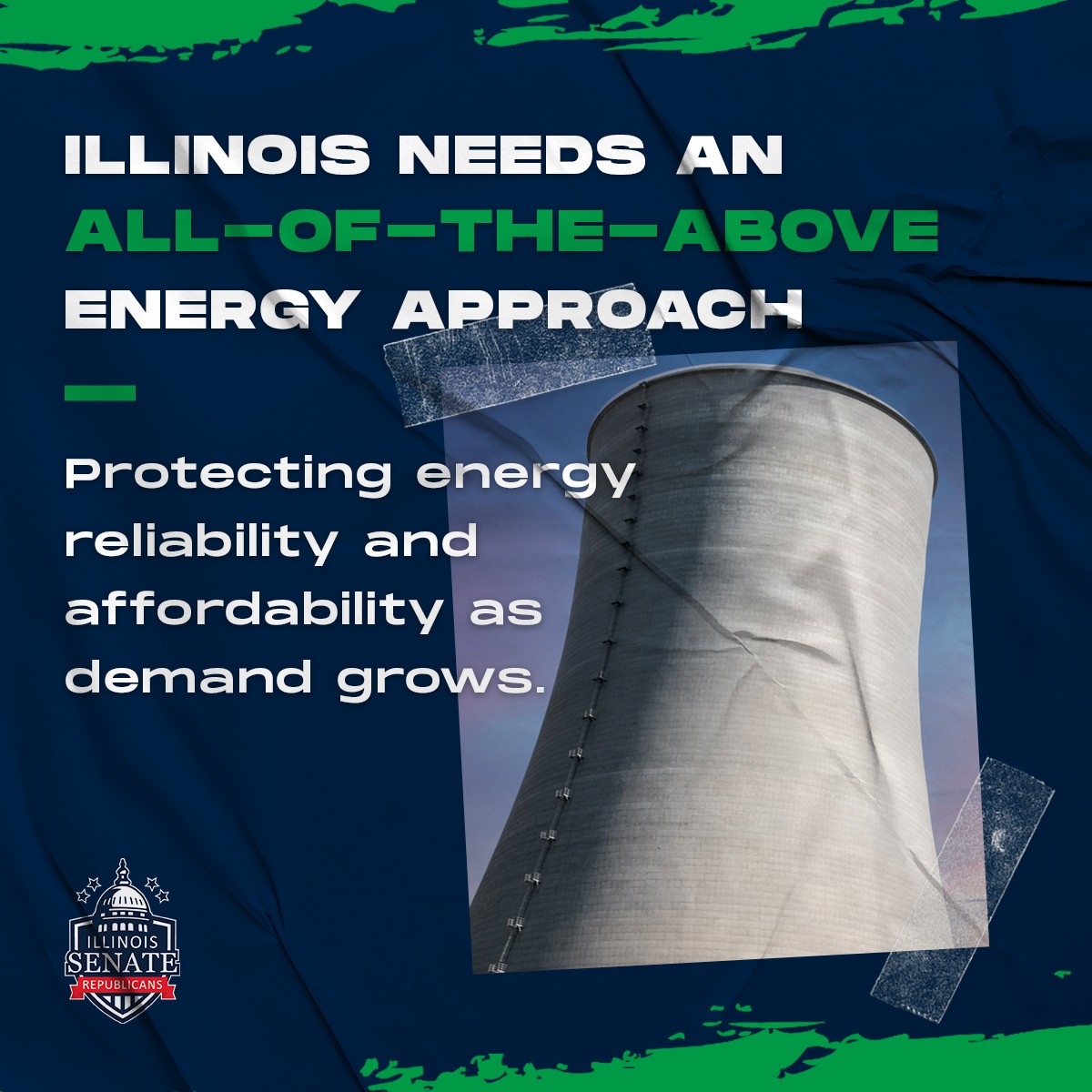
Illinois needs a comprehensive, all-of-the-above energy strategy that embraces nuclear power, natural gas, renewables, battery storage, and other technologies capable of delivering dependable, affordable electricity. While Illinois must prepare for the growing energy demands of data centers and emerging technologies, that growth cannot come at the expense of families and small businesses already struggling to pay their utility bills.
While no vote was taken during the hearing, the POWER Act could return for further consideration during the final week of the fall veto session.
Comments are closed